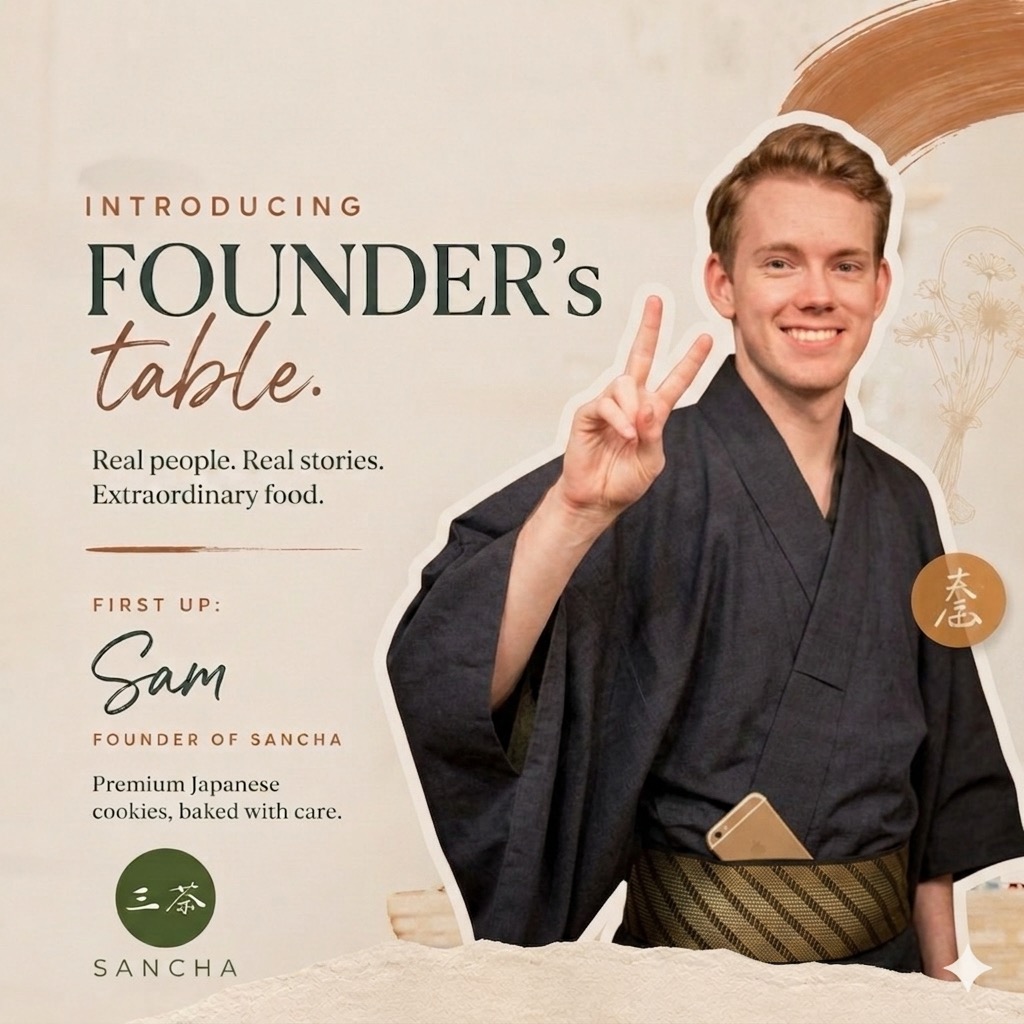
Seven years in Japan, a near-fatal accident, a traumatic brain injury and a box of cookies that might be the best thing you'll eat in Cambridge this year.
I'll be honest. When Sam first told me his story, I didn't know what to say.
That doesn't happen often. Running Cambridge Food for as long as I have, I've sat across from a lot of passionate food people. I've heard plenty of origin stories but Sam's stopped me completely.
That is why I started Founder's Table. Not to review menus or rate the cuisine or interiors, but to tell the stories that sit behind the food. The ones about sacrifice, obsession, and the kind of resilience that most of us will never have to muster up. Sam's story is all three of those things, and then some.
Seven years in Japan
Before there was SANCHA, there was a young man who fell completely in love with a country that wasn't his own from an incredibly young age.
After being enamoured with the country in his younger years through computer games, music and movies, Sam spent seven years living in Japan. Not visiting, not travelling through — living. Long enough to absorb the culture at a level that goes beyond surface appreciation; long enough to understand that Japanese food philosophy isn't just about ingredients or technique, but about a relationship between maker and material that takes years to develop.
He came back and had to readjust to life in the UK. It was during the COVID pandemic and after seven years living abroad. "All of my friends had moved on with their lives; it was incredibly lonely and isolating," he told me when we met in Eddington on a sunny, late-spring day.
“One day, I thought of starting a Japanese food brand as a way to meet people to counter the loneliness and find purpose in my life again.”
After coming back to the UK, Sam really missed Japanese sweets — known as 和菓子 (wagashi) — and so, to fulfil his desire, started baking using his knowledge of baking, fusing it with Japanese flavour. SANCHA was born.
三茶 — Sancha — an abbreviation for Sangenjaya (三軒茶屋) and inspired as a brand name by the three tea houses historically situated in Tokyo during the Edo period, is a premium cookie brand built around highlighting Japanese flavours, imported ingredients and a Japanese approach to care in the baking process, with a clear reverence to the passing seasons and nature.
"I chose the name 三茶 because of those three tea houses. I really loved the imagery of people meeting together and sharing tea and sweets together." For Sam, people have always been at the heart of what he does.
What happened next
Here is where the story changes.
A few years ago, Sam was in a serious car accident. He nearly lost his life. What followed was two and a half years of recovery from a traumatic brain injury — a period that would test anyone's sense of self, let alone their ability to restart a passion project.
Most people would have let SANCHA go. The sensible thing, the self-protective thing, would have been to set it aside and focus on getting better.
“Sam didn't. He kept going. Not quickly, not without difficulty, but steadily. Still baking. Still pushing. Still caring about every detail of every product he puts the SANCHA name on.”
That's the kind of person Sam is. It's the reason, I think, that SANCHA feels the way it does when you open the box.
The product
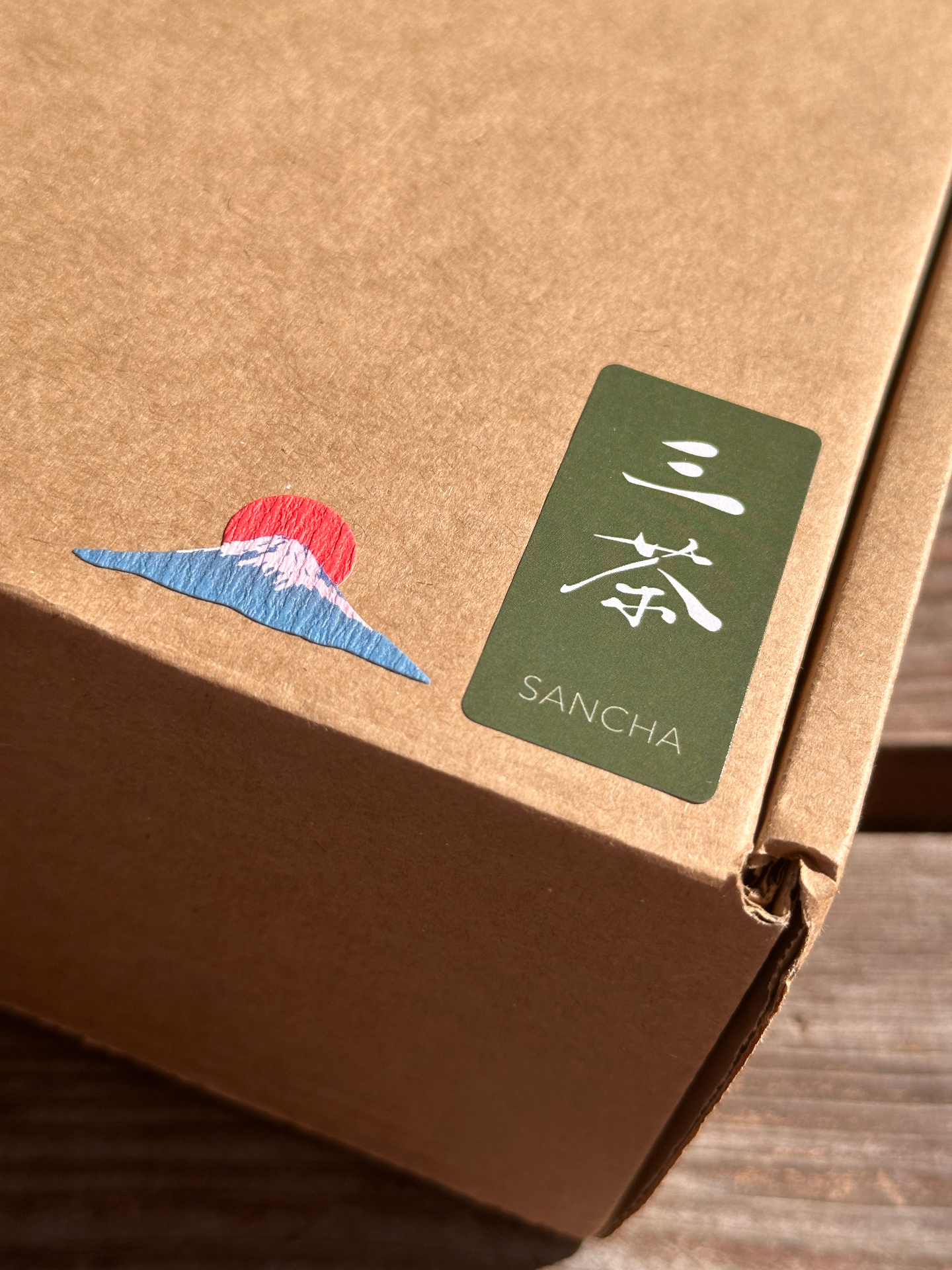
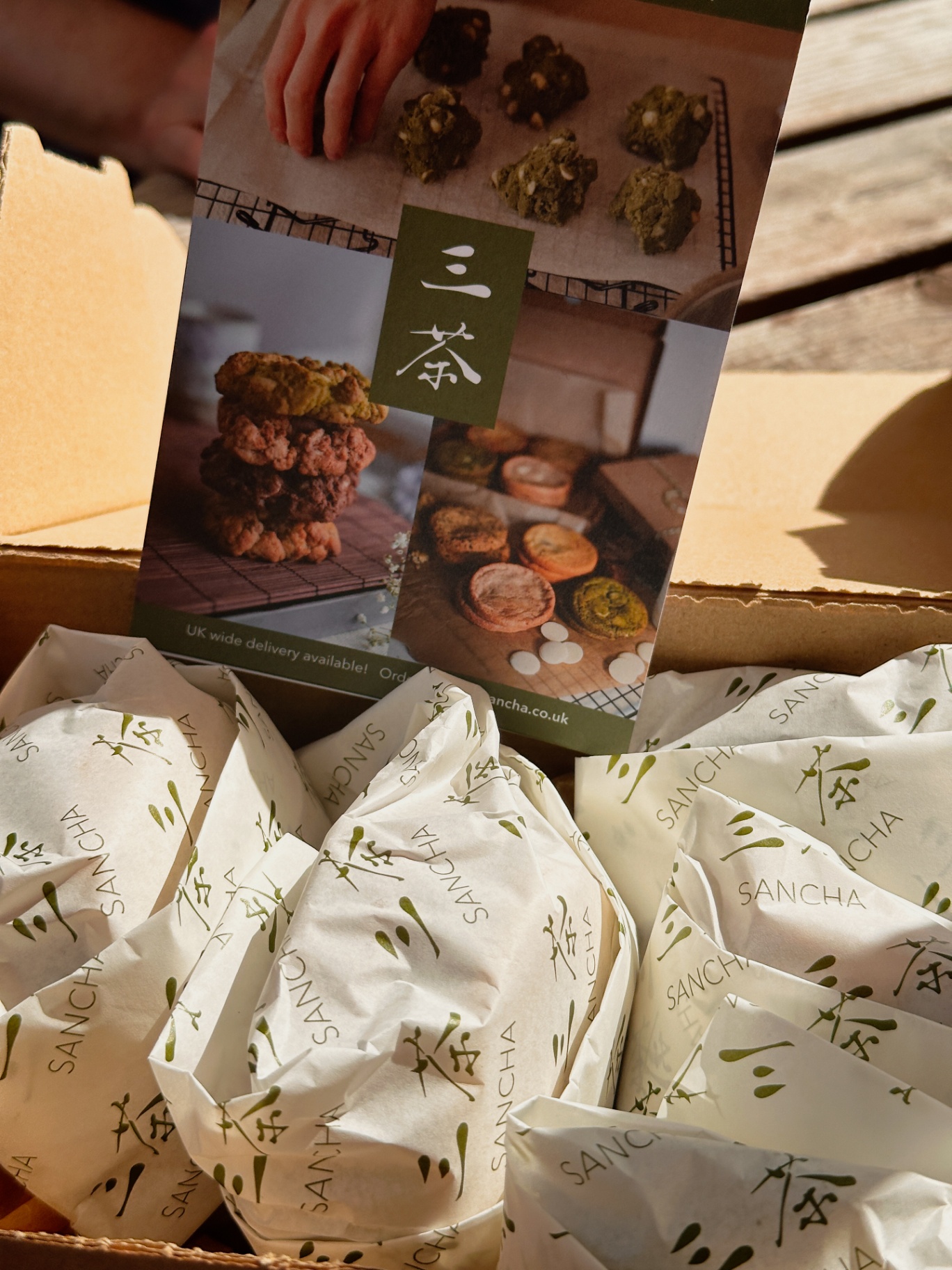
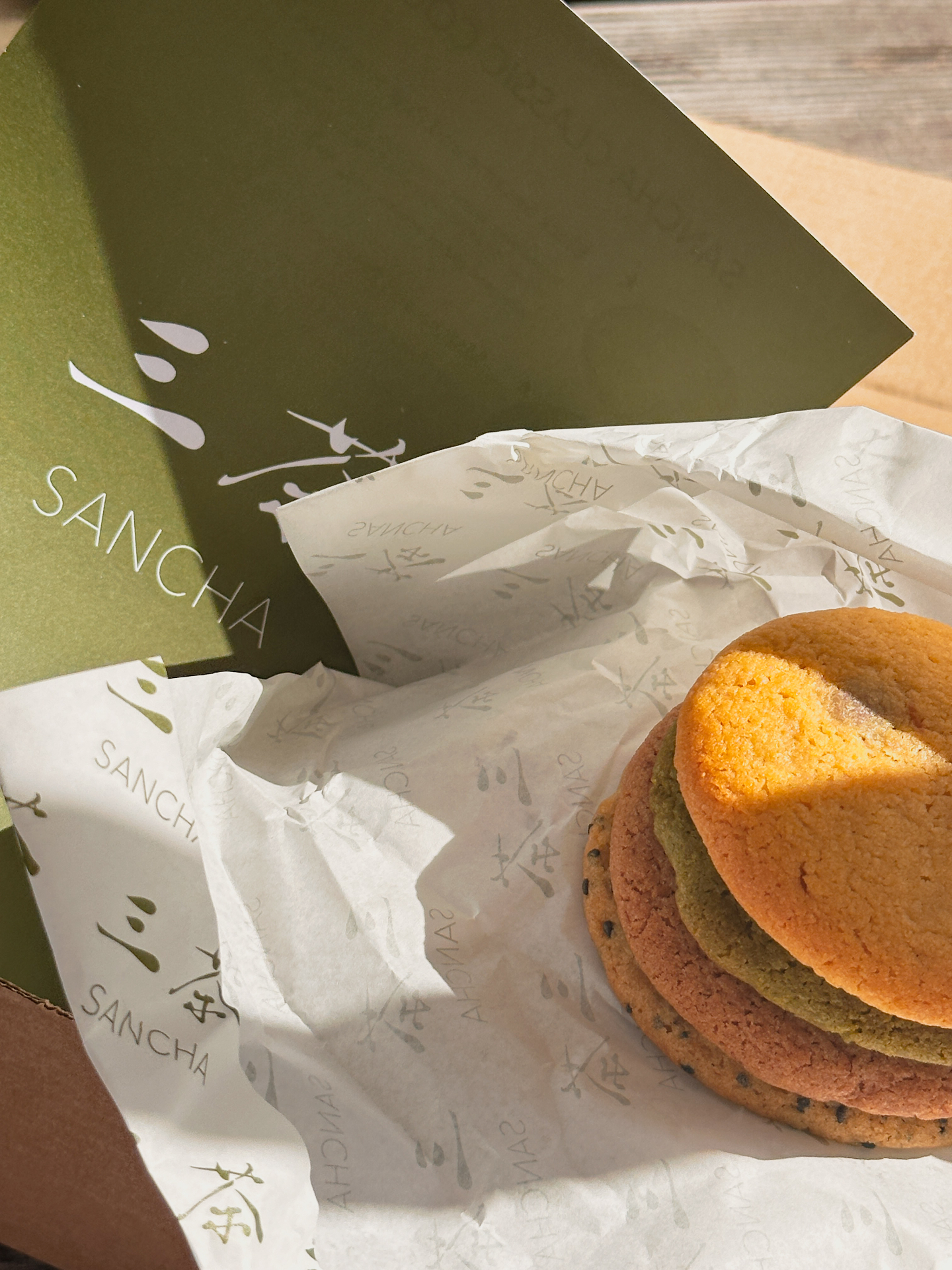
There is a premium humility to SANCHA that you don't find in most food brands. You can see it immediately in the packaging — a matcha-green box with white kanji, greaseproof paper printed with branding, and a kraft box carefully containing artisanally crafted bakes. It's considered without being fussy; premium but with a heart.
Then you get to the cookies, and that's where the seven years in Japan make complete sense.
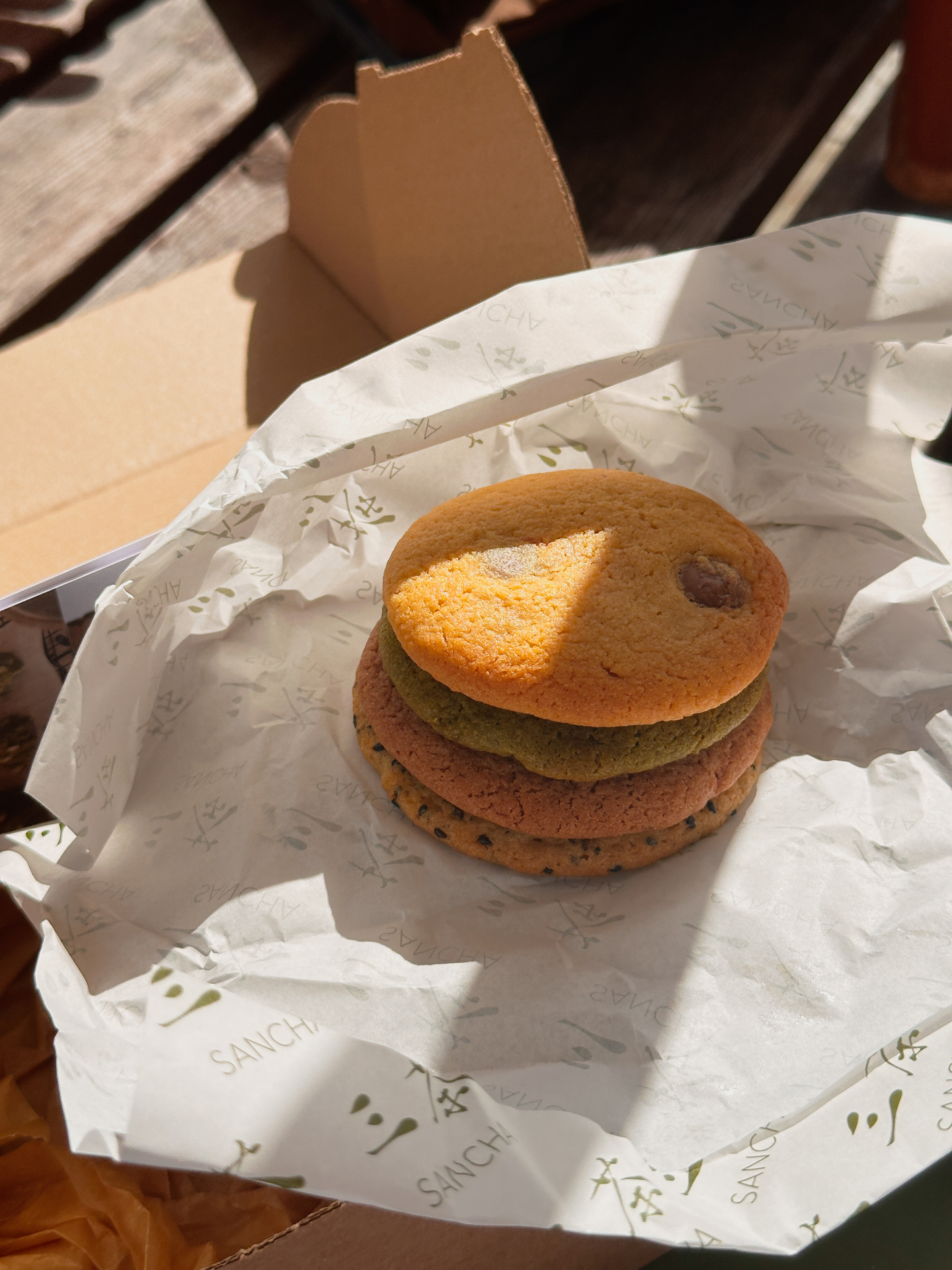
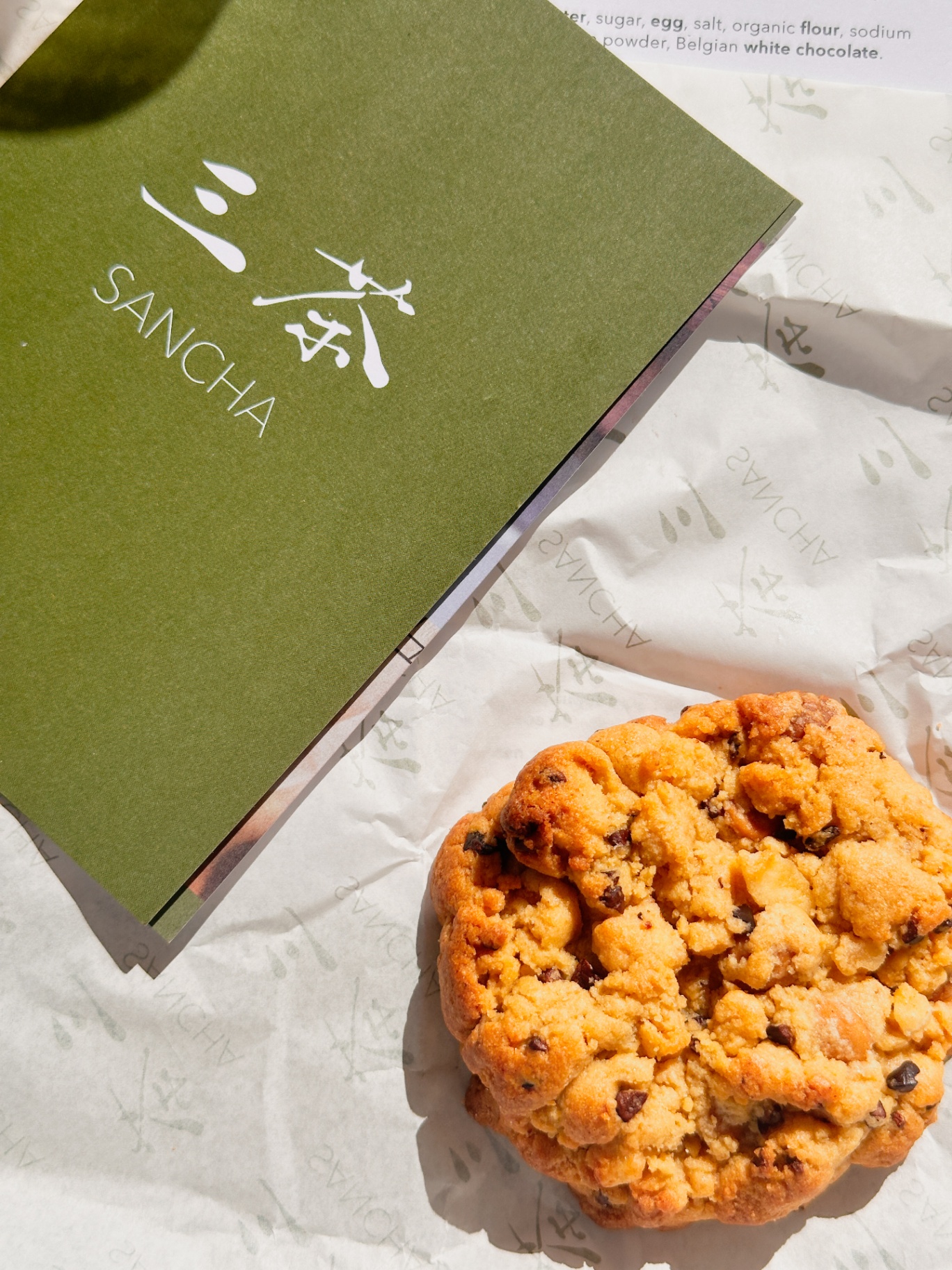
The range spans two distinct styles. The first is the classic variety. I was kindly gifted four of the many flavours to try — Kinako and Belgian Milk Chocolate on top, Matcha and White Chocolate below that, then Strawberry and White Chocolate (made with real strawberries), and finally SANCHA's best-selling Black Sesame and Pink Himalayan Salt at the bottom. Each colour is a flavour, and each flavour is made with 100% real ingredients, striving to highlight the best that nature has to offer.
The second style is a chunky, premium cookie — the kind that has texture and weight and is truly indulgent. The Matcha and Macadamia is the standout here: a vibrant colour, with visible pieces of nut throughout and a matcha depth that doesn't fade. It tastes like someone who actually knows matcha made it.
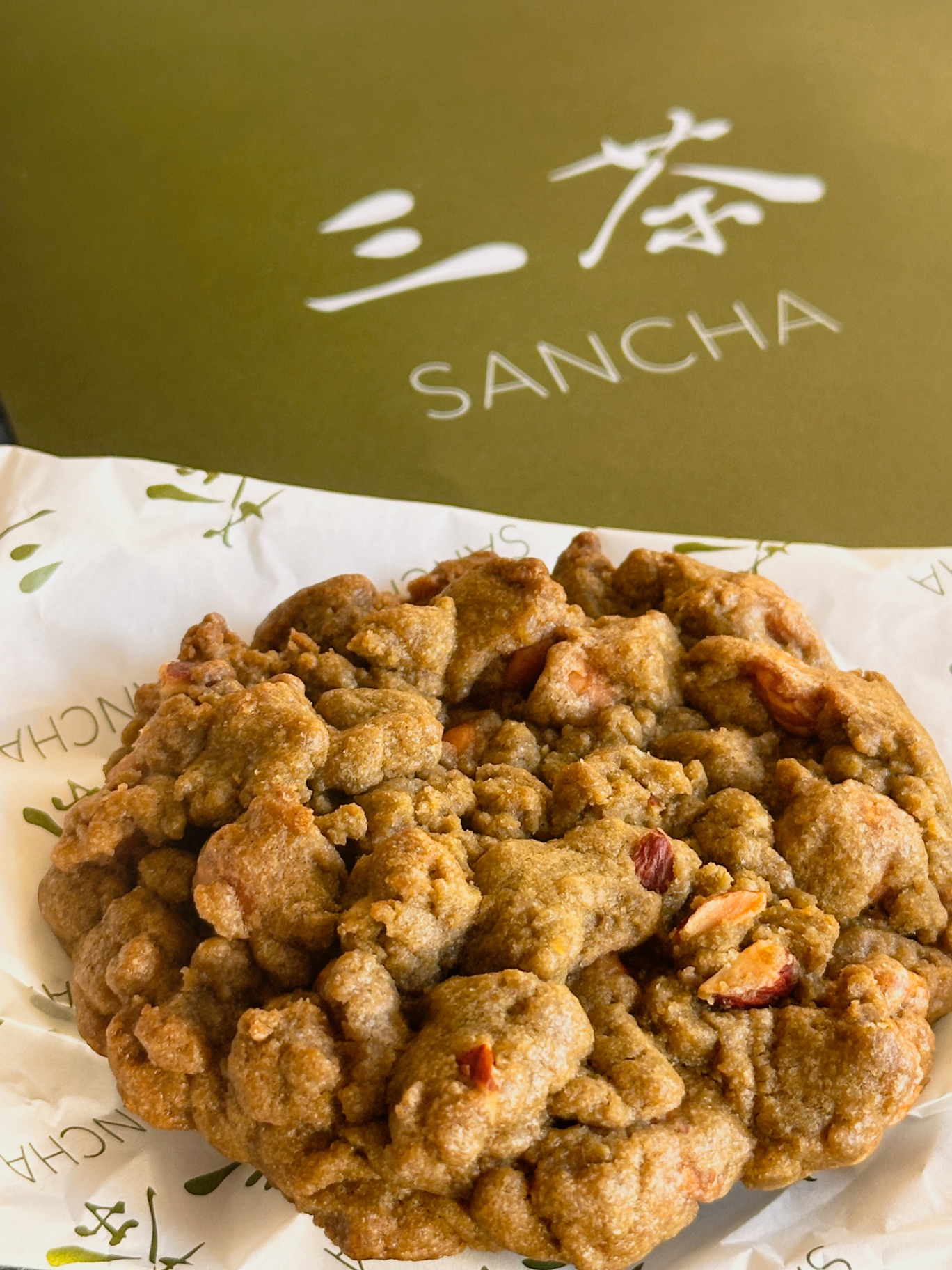
My personal favourite from the sitting? The Banana Miso Caramel. Don't sleep on it. It shouldn't work as well as it does, and yet it's the one I keep thinking about.
A brand that earns its place
Cambridge has a food scene that's quietly better than most people give it credit for, but it still has a tendency to play it safe. What SANCHA represents is something rarer: a founder who brings a genuine cultural perspective to what he makes, who has built a brand with real intentionality, and who has had every reason to quit and chose not to.
The coherence of SANCHA is what strikes me most. From the name and logo to the packaging and flavours, everything speaks the same language. That's genuinely hard to achieve, particularly for a young, independent brand. It usually takes years of iteration and a significant amount of money. Sam has done it on the back of passion, craft knowledge and a tenacity I find deeply admirable.
You'll find Sancha at local Cambridge markets, pop-up shops, and private events. They ship nationwide from sancha.co.uk, and once you've tried one box I suspect you'll be back.
Sam, it was a genuine pleasure. I can't wait to watch what comes next.
Find Sancha at [sancha.co.uk](https://www.sancha.co.uk) and on Instagram [@sancha_uk](https://www.instagram.com/sancha_uk/).
Share this episode